Introduction
Dining tables are where families gather, conversations unfold, and everyday moments take shape. When choosing the right table, materials matter. In recent years, epoxy resin tables have gained attention for their glossy finishes and dramatic designs, while solid wood tables continue to hold their place as a trusted, time-tested choice.
While both options have their appeal, the differences become clearer when you look beyond surface aesthetics. This guide explores craftsmanship, durability, maintenance, and long-term value, all of which play a role in determining which material truly stands out. We compare epoxy resin and solid wood tables in depth, from how they are made to how they perform over time, and explain why solid wood remains the preferred choice for lasting quality.
Key Takeaways:
- While epoxy resin tables offer striking visual appeal and custom design possibilities, factors such as repairability, heat sensitivity, and long-term ageing can affect their practicality over time.
- Solid wood tables provide lasting value through their durability, natural character, and ability to be restored, refinished, and maintained rather than replaced.
- When comparing between resin and wood, consider performance, maintenance requirements, sustainability, and long term-ownership costs.
- Properly prepared solid wood, including kiln-drying, acclimatisation, protective treatments, and skilled craftsmanship, can deliver reliable performance for decades of everyday use.
- For homeowners seeking a dining table that combines timeless aesthetics, long-term usability, and environmental responsibility, solid wood remains one of the most dependable furniture materials available.
Why Buyers Compare Epoxy Resin and Solid Wood Tables
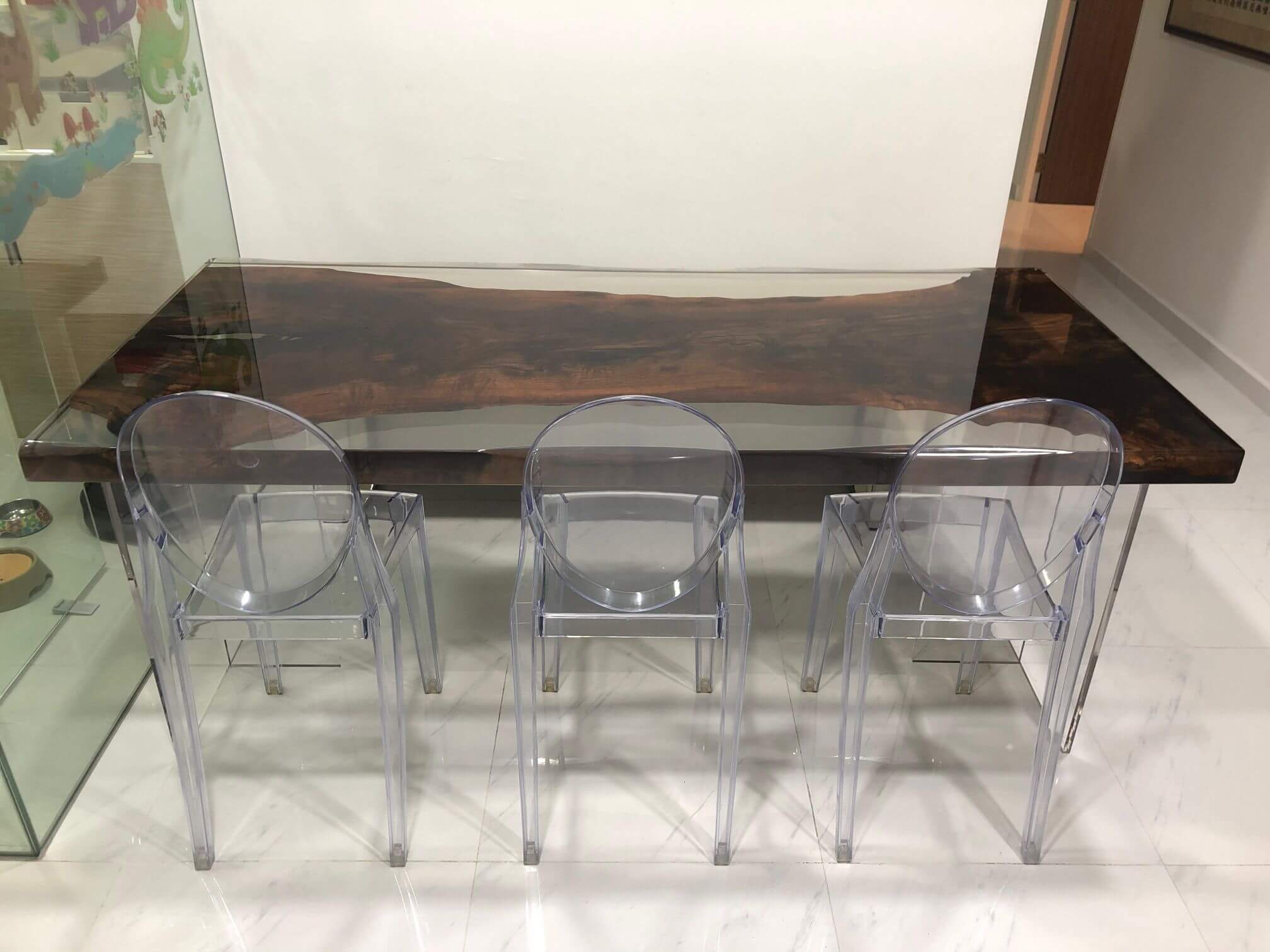
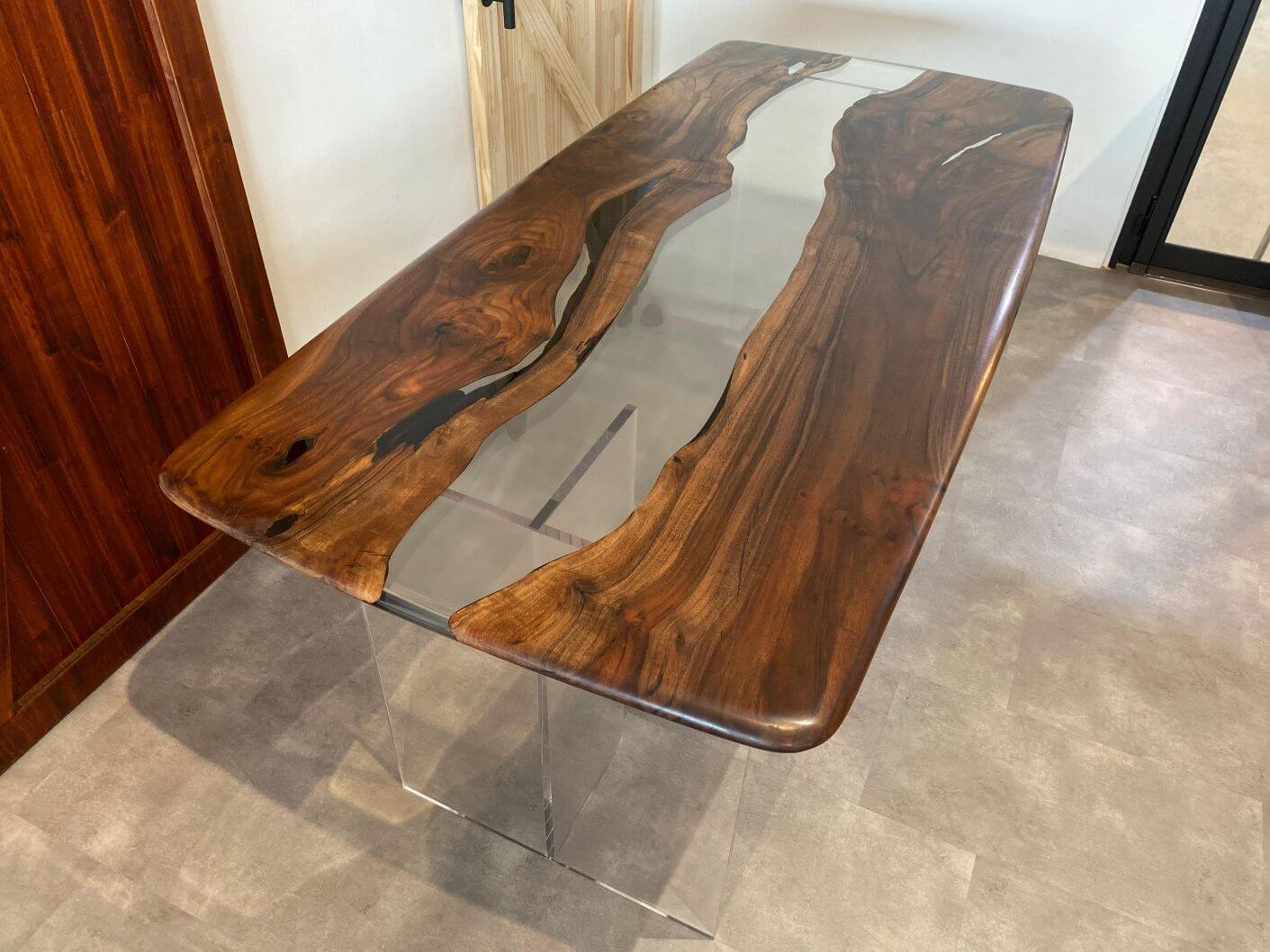
Buyers often compare epoxy resin tables with solid wood options because both are positioned as premium dining table choices. They are commonly presented in similar formats, such as large slab-style tables or statement centrepieces, which naturally invites direct comparison.
One of the main reasons lies in design direction. Epoxy resin tables are known for bold, high-gloss finishes and artistic elements, while solid wood tables highlight natural grain and a more timeless, organic look. This contrast leads buyers to evaluate which aesthetic better suits their space.
Customisation also plays a role. Epoxy allows for added colours and design features, whereas solid wood offers variation through natural patterns and slab selection. This creates a choice between engineered visual effects and naturally occurring uniqueness.
Visual presentation further influences comparison. Epoxy resin tables are often styled to emphasise dramatic impact, while solid wood tables are showcased for authenticity and craftsmanship. As both occupy a similar space in design and function, they are frequently considered side by side early in the decision-making process.
Understanding Epoxy Resin in Table Making
Where Epoxy Resin Comes From
Epoxy resin is a fully synthetic material formed through a chemical reaction between epoxide resins and curing agents. These components are typically derived from petrochemicals, meaning they originate from crude oil or natural gas refining processes. Unlike natural materials, epoxy is engineered in industrial environments to achieve properties such as hardness, adhesion, and moisture resistance.
Because of this composition, epoxy can be customised for various applications, including coatings, adhesives, and furniture finishes. In table-making, specialised casting epoxy is used to cure slowly and form thick, transparent layers that can fill large voids or create decorative effects.
How Epoxy Resin Is Used in Wood Tables
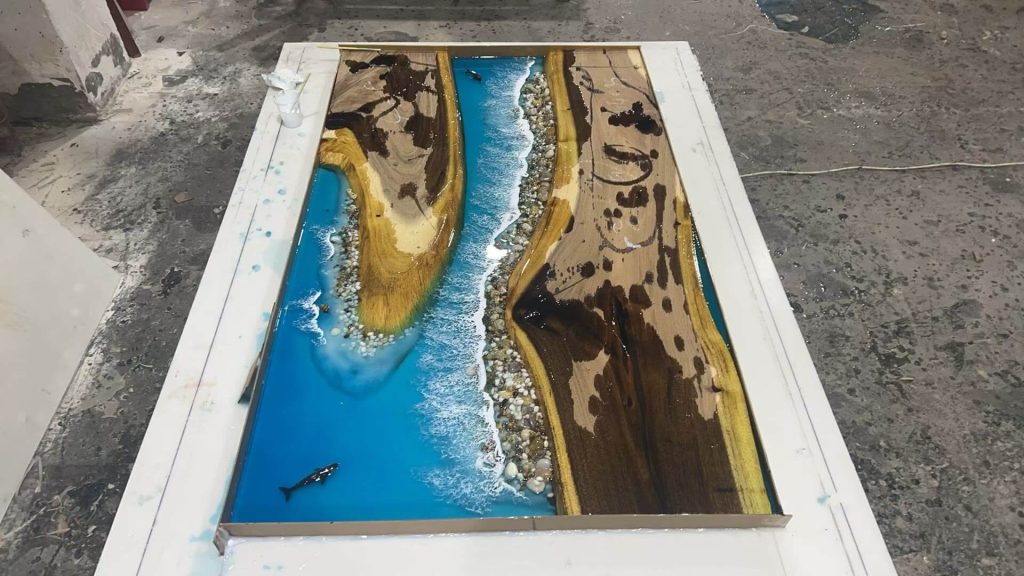
The process of creating an epoxy resin table usually begins with a wood slab that contains natural cracks, gaps, or irregular edges. Instead of removing these features, they are incorporated into the design. The wood is placed into a mould, and liquid epoxy is poured into the gaps or across the surface.
Design variations often include adding pigments, dyes, or metallic powders to achieve distinctive visual effects. A common example is the “river table,” where coloured epoxy resin runs between two slabs of wood to mimic flowing water.
After pouring, the epoxy undergoes a curing process that can take several days. During this time, it hardens into a solid form through a chemical reaction. The surface is then sanded and polished to achieve a smooth, glossy finish.
Why Some Buyers Choose Epoxy Resin Tables
Epoxy resin tables are often selected for their strong visual appeal. Their high-gloss finish and customisable designs make them stand out as statement pieces in modern interiors. The ability to incorporate colours, patterns, or embedded elements allows for a high level of personalisation.
Another reason for their popularity is the use of irregular wood slabs or pieces with insufficient width to form a table surface. Due to the small width of the available wood, makers have no choice but to use epoxy resin to create a larger surface suitable for dining table usage. Epoxy can fill voids and stabilize these pieces, turning natural imperfections into design features. This approach is sometimes seen as a way to maximise the use of raw materials.
Epoxy surfaces are also perceived as resistant to water and stains due to their sealed finish. This can give the impression of easy maintenance in everyday use.
However, these benefits tend to focus on appearance and short-term convenience. Over time, factors such as wear, sunlight exposure, and heat sensitivity may affect performance, which becomes more apparent when compared to solid wood.
What is a Solid Wood Table?
How Solid Wood Is Sourced
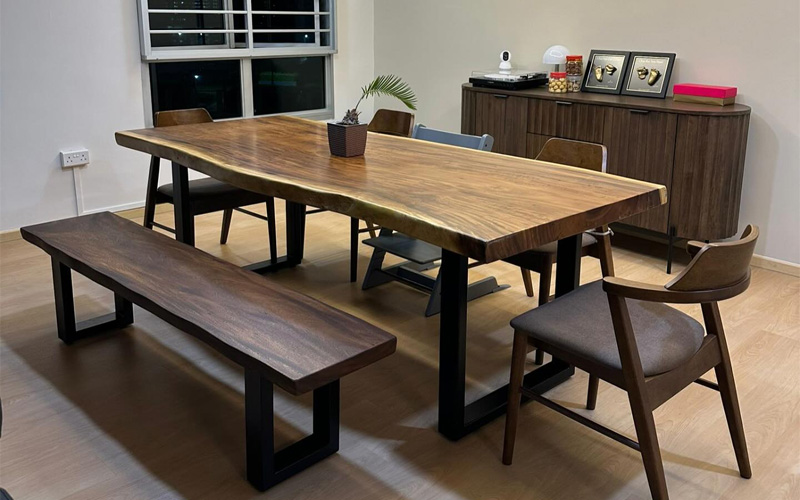
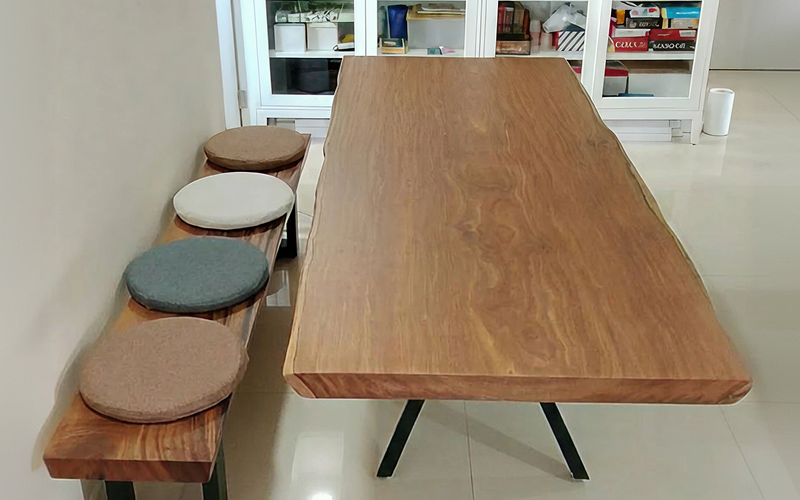
Solid wooden tables are crafted from natural timber, cut directly from tree trunks into slabs or boards. The quality of the final product begins with careful material selection. Hardwoods such as suar, teak, mahogany, and walnut are commonly used due to their density, strength, and durability.
Each piece of wood carries its own grain pattern, colour variation, and natural markings. These features are not manufactured but formed over years of growth, making every table unique.
Responsible sourcing is an important part of the process. Many manufacturers rely on sustainably managed forests where trees are harvested in controlled cycles and replanted to maintain ecological balance. Others incorporate reclaimed wood from older structures, extending the lifecycle of existing materials.
Once harvested, the timber is inspected and prepared for further processing, with natural characteristics preserved as part of the table’s identity.
How Solid Wood Is Prepared for Durability
Before a solid wood table is completed, careful preparation is carried out to ensure long-term stability and performance. This process begins with the selection of suitable wood slabs, where attention is given to both structural strength and natural grain characteristics. Choosing the right material helps ensure that the table can withstand daily use while maintaining its natural appearance.
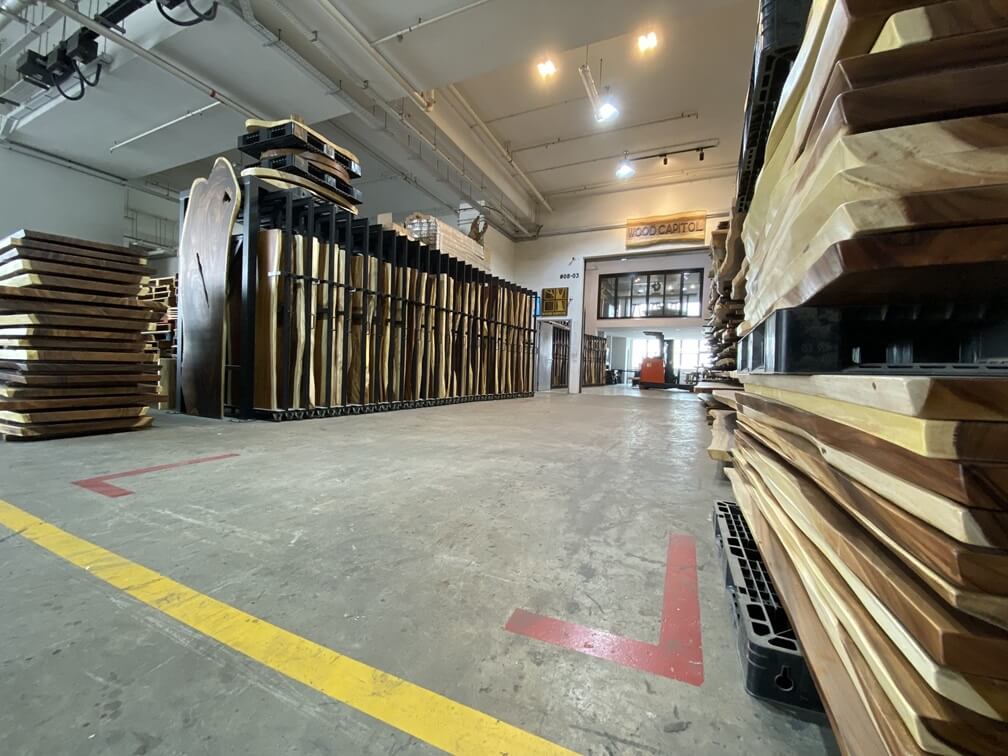
To enhance durability, several treatment methods are applied at different stages. Kiln-drying is used to remove excess moisture from the wood, helping to prevent issues such as warping or cracking after the table is placed in a home environment. In addition, the wood undergoes a period of acclimatisation to Singapore’s humid conditions, a process Wood Capitol observes for a minimum of six months to ensure the timber adjusts to local climate levels before woodworking begins. This reduces the likelihood of movement caused by changes in humidity over time.
Protection against environmental factors is also addressed through specialised treatments. Vacuum-pressure treatment is used to strengthen the wood’s resistance to termites, offering long-term protection and added reliability. On the surface level, a water-resistant and stain-resistant nano-coating is applied to help guard against everyday spills, marks, and wear without masking the natural texture of the wood.
At Wood Capitol, these preparation methods are supported by a hands-on craftsmanship approach. Each slab is carefully worked on to preserve its integrity while shaping it into a functional table. This includes smoothing surfaces, ensuring balanced construction, and maintaining consistency throughout the piece.
Quality checks are carried out throughout the process to ensure that each table meets expected standards. This includes verifying surface finish, structural stability, and overall workmanship. By combining careful material preparation with skilled execution, the result is a solid wood table that is built to handle long-term use while retaining its natural character.
Why We Choose Solid Wood over Epoxy Resin
Repairability and Long-Term Usability
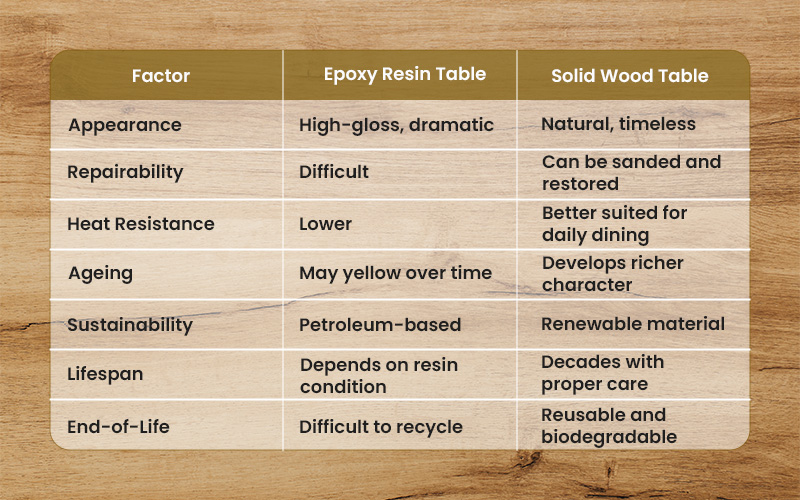
When it comes to long-term ownership, repairability plays a major role in how practical a table is over the years. Epoxy resin tables, while visually smooth, can be difficult to repair once the surface is damaged. Chips, cracks, or deep scratches in resin typically require specialised tools and may involve reworking an entire section of the tabletop. Because epoxy is poured and cured as a continuous layer, localised fixes are not always seamless, and repaired areas can differ in clarity or gloss.
Solid wood tables offer a more flexible approach. Since the material is consistent throughout, surface wear can be addressed directly. Light scratches can be sanded out, and even deeper marks can often be repaired without affecting the overall structure. Over time, the tabletop can be refinished multiple times, effectively renewing its surface. This repairability is often considered one of the key benefits of a solid wood table, particularly for households where daily wear is expected.
Surface Ageing and Visual Consistency
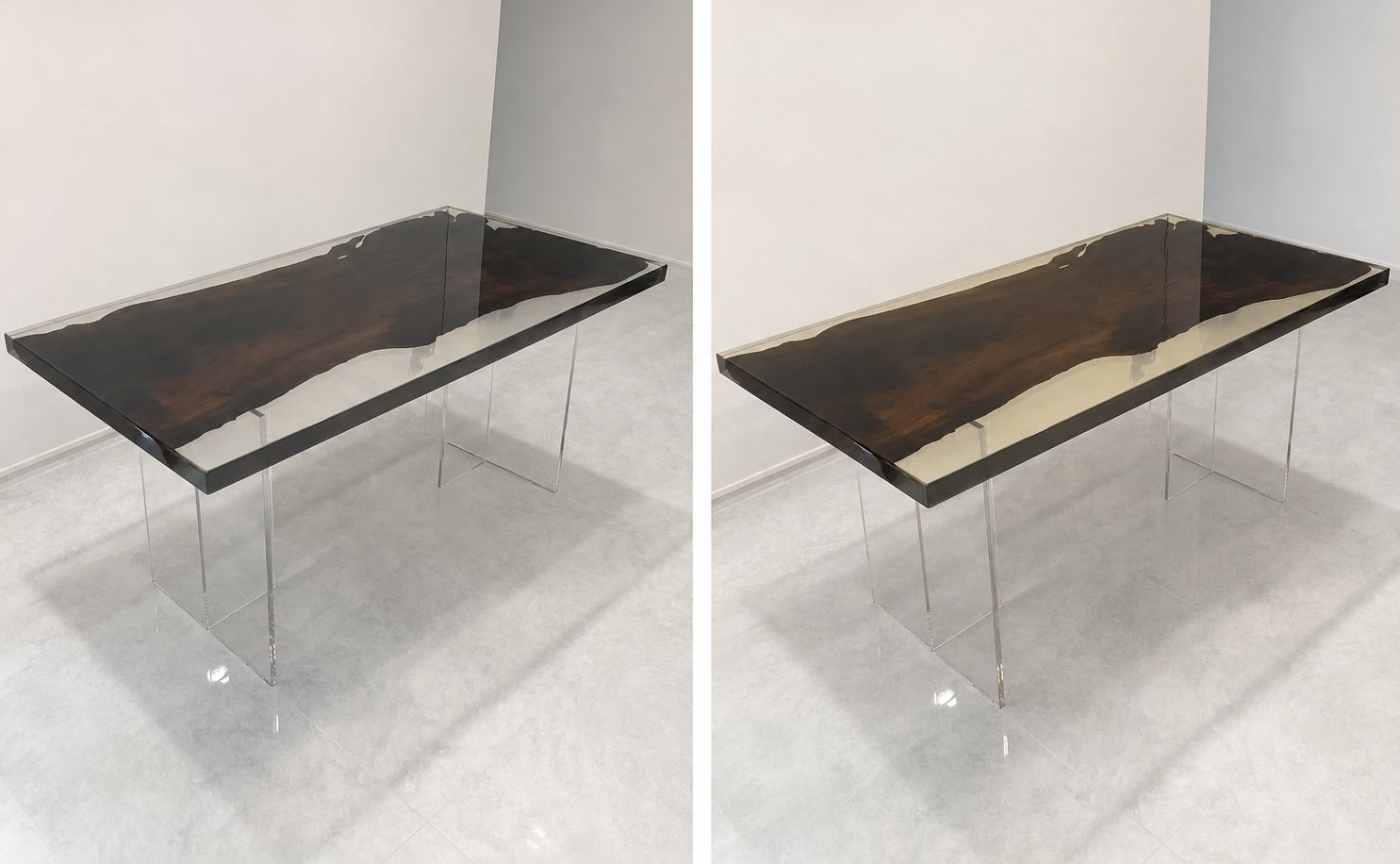
As materials age, their visual stability becomes increasingly important. One of the disadvantages of epoxy resin tables is that they are known to change in appearance over time, particularly when exposed to sunlight. UV exposure can cause yellowing or cloudiness, which reduces the clarity of the material. While some formulations are designed to slow this process, they do not fully prevent it, and once discolouration occurs, it is difficult to reverse.
Solid wood behaves differently as it ages. Instead of degrading like resin, it undergoes gradual and often desirable changes. Exposure to light and air can deepen the tone of the wood, creating a richer and more consistent appearance over time. These changes tend to enhance the natural character of the material rather than detract from it. As a result, solid wood maintains visual integrity in a way that aligns with long-term use.
Performance Under Heat and Daily Conditions
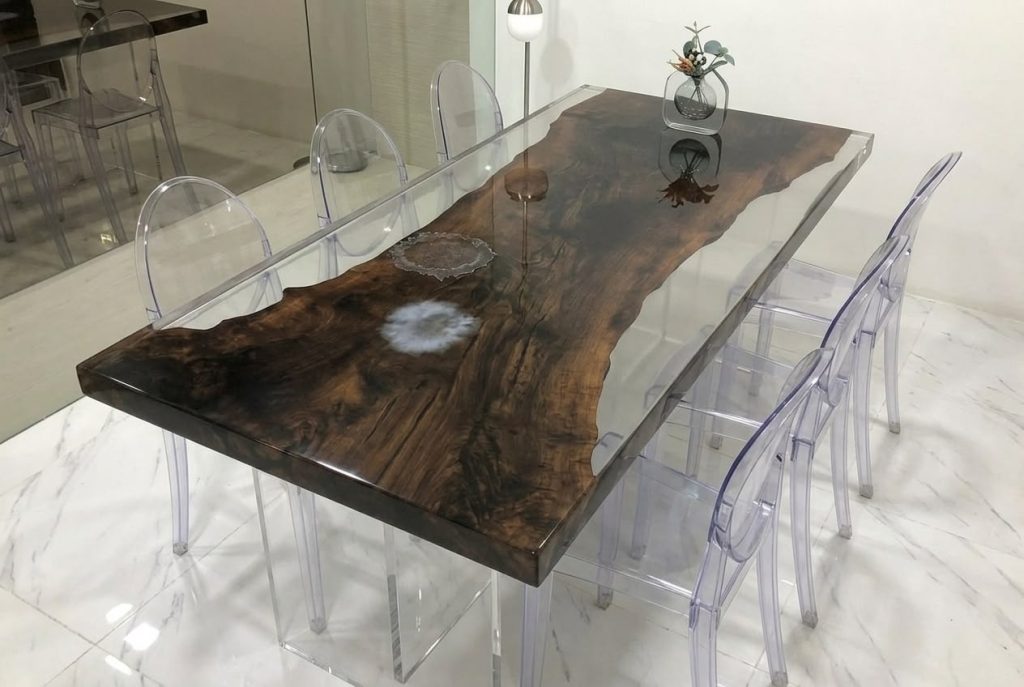
Dining tables are regularly exposed to heat from cookware, serving dishes, and beverages. Epoxy resin has a relatively low heat tolerance compared to natural wood. Placing hot items directly on the surface can lead to heat marks, softening, or even permanent deformation. This makes it necessary to consistently use protective barriers such as trivets or mats.
Solid wood is generally more resilient in everyday conditions. While it is still advisable to avoid direct exposure to extreme heat, wood does not soften or deform in the same way as resin. Its natural structure allows it to handle temperature variations more effectively, making it better suited for typical dining use where hot items are frequently present.
Structural Behaviour Over Time
Another important difference lies in how each material responds to environmental changes. Epoxy resin tables are typically made from a combination of wood and resin, two materials with different physical properties. Wood expands and contracts with humidity, while resin remains relatively stable. This mismatch can create internal stress at the bonding points over time, especially in climates with fluctuating temperature and humidity levels.
Solid wood tables, being made from a single material, respond more uniformly to environmental changes. While wood does expand and contract slightly, this movement is predictable and accounted for during construction. This consistency contributes to the overall durability and reliability of solid wood furniture.
Environmental Impact and Material Lifecycle
The environmental impact of a table depends not only on how it is made, but also on how long it can be used and what happens at the end of its lifecycle. Epoxy resin is a petroleum-based material that requires chemical processing and cannot biodegrade. Once an epoxy table reaches the end of its usable life, it is difficult to recycle due to the combination of materials.
Solid wood offers a more sustainable furniture material when responsibly sourced. As a renewable material, solid wood can be replenished through managed forestry practices. Beyond renewability, it also serves as a natural carbon sink, storing carbon captured during a tree’s growth and helping to keep that carbon out of the atmosphere for as long as the wood remains in use.
In addition, the longevity of wood tables reduces the need for replacement, and it can be repaired, repurposed, or refinished multiple times. Even at the end of its use, wood can be reused or naturally decomposed, making it a more environmentally aligned option.
Wood Capitol also prioritises responsibly sourced timber, allowing homeowners to enjoy natural wood furniture while supporting more sustainable material practices.
Associations in Feng Shui Belief
For some homeowners, choosing a dining table goes beyond design and functionality. Cultural beliefs such as Feng Shui also play a role in how furniture is selected and arranged. In this context, materials are thought to carry different types of energy. Solid wood, in particular, is often associated with growth, vitality, stability, and balance within the home.
A solid wood table is generally viewed as a symbol of strength, continuity, and grounded energy. A well-crafted piece with a stable structure and smooth surface is believed to support harmony and enhance the flow of positive energy (Qi). This aligns with the Feng Shui principle that furniture should contribute positively to the environment rather than disrupt it.
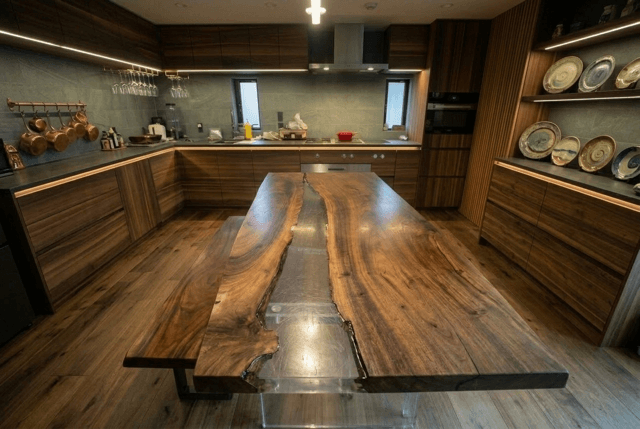
The Importance of Solid Wood (No Cracks or Holes)
Conversely, features such as deep cracks, gaps, hollow sections, or chips may be interpreted as interruptions in energy flow. In Feng Shui, these imperfections are often associated with the concept of “energy leakage.” This means that wealth, opportunities, or positive momentum are thought to weaken over time, similar to water leaking from a cracked container. Additionally, broken or decayed items symbolise neglect and can trap negative energy. They may disrupt abundance and lead to feelings of instability in career or home life.
Because of this, a strong, sturdy, and smooth wood tabletop free of cracks or holes is considered ideal for attracting prosperity and maintaining peace. Rather than inviting instability, it symbolises consistency, stability, and lasting well-being.
Overall Value Over Time
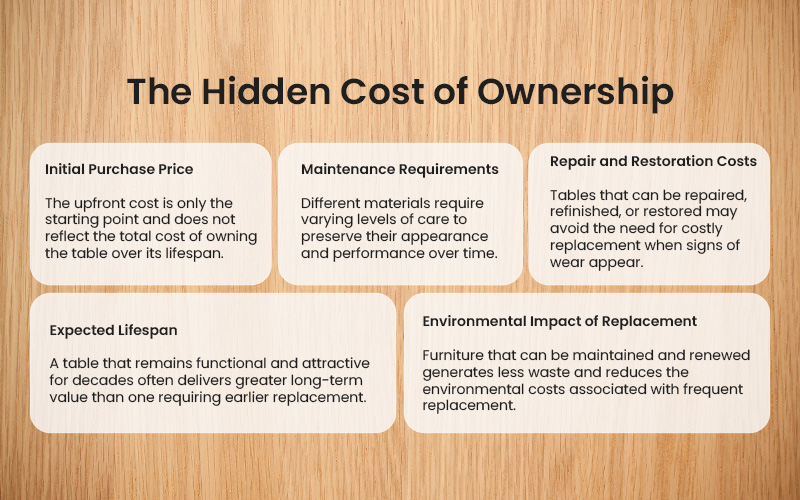
When evaluating value, it is important to consider not just the initial purchase but how the table performs over years of use. Epoxy resin tables may offer strong visual appeal at the start, but their limitations in repairability, sensitivity to environmental factors, and potential for visual change can affect their long-term practicality.
Solid wood tables provide a more balanced form of value. Their durability, ease of maintenance, and ability to be restored contribute to a longer usable lifespan. Instead of being replaced when signs of wear appear, they can be maintained and renewed, allowing them to remain functional and visually appealing for many years. This long-term perspective is what ultimately makes solid wood the more reliable investment.
How to Maintain and Restore Solid Wood Tables
Solid wood tables are designed for long-term use, and consistent care plays a key role in preserving both their appearance and structural integrity.
Everyday Maintenance
In everyday maintenance, simple cleaning methods are often sufficient. Using a soft microfibre or synthetic cloth, slightly dampened with water, helps remove dust, dirt, and surface residue without causing scratches. For surfaces with grease or heavier buildup, a mild hand soap solution can be used. Harsh cleaning agents such as commercial detergents, bleach, or alcohol-based products should be avoided, as they can gradually degrade the protective finish over time .
Maintaining hygiene and cleanliness also contributes to long-term durability. Wiping down the table after meals prevents the buildup of grime and bacteria, while ensuring spills are not left overnight reduces the risk of staining. Regular dusting helps prevent surface dullness and keeps the table comfortable to use.
Long-Term Maintenance
Over the long term, environmental placement and usage habits also matter. Keeping the table under sheltered conditions, such as indoors or within a covered area, helps protect it from excessive sunlight and moisture exposure. While kiln-dried and nano-coated solid wood can tolerate minor exposure to environmental elements, prolonged conditions without protection may still affect its surface over time. Avoiding actions such as dragging heavy objects across the tabletop further helps preserve its finish and prevents deeper scratches from forming .
As the table ages, signs of wear such as scratches, stains, or slight surface changes may appear. Unlike many furniture materials that require replacement when heavily worn, Wood Capitol’s restoration services allow existing tables to be renewed through professional sanding, refinishing, and surface restoration. This helps homeowners preserve the character of their original table while extending its usable lifespan.
This ability to restore and refinish the wood table is one of the defining advantages of solid wood. With proper maintenance and occasional professional care, a solid wood dining table can continue to perform well and retain its natural appeal for many years, making it a reliable long-term investment.
Frequently Asked Questions About Solid Wood Tables
Can a solid wood table be resized or modified later?
In some cases, yes. Solid wood can be cut, reshaped, or adjusted by professionals, depending on the design. This makes it more adaptable than many synthetic or composite materials.
Can solid wood tables handle heavy weight?
Yes, solid wood tables are known for their strength and can support significant weight. This makes them suitable for large meals, heavy serving dishes, and everyday use without concern.
How do I know if a table is truly solid wood?
Check the edges and underside. Solid wood will show consistent grain throughout, while veneer or engineered wood often has a thin surface layer with a different core. Weight and texture can also be indicators, as solid wood feels denser and more natural.
Conclusion
While epoxy resin tables offer bold designs and visual impact, their limitations become more apparent over time. Factors such as repair difficulty, sensitivity to heat, potential yellowing, and environmental concerns can affect their long-term value.
Solid wood, in contrast, provides durability, adaptability, and a natural aesthetic that improves with age. It is a material designed for longevity, capable of being maintained and restored rather than replaced.
Wood Capitol supports this longevity through careful timber preparation, climate acclimatisation, protective treatments, and craftsmanship designed to help each table perform reliably for years of everyday use.
For those seeking a dining table that combines craftsmanship, reliability, and lasting value, solid wood remains the stronger choice. To explore thoughtfully crafted solid wood dining tables suited for long-term use, contact us for more information.
Why We Choose Solid Wood Over Resin: Craftsmanship, Quality, and Long-Term Value Explained
Can All Wood Tables Be Refinished? What Homeowners Should Know

Wood Flooring Types for Singapore Homes: Hardwoods, Engineered, vs Solid Planks
Teak Wood: A Guide to Properties, Performance and Long-Term Value

Why Solid Wood Handrails Age Better Than Engineered Alternatives